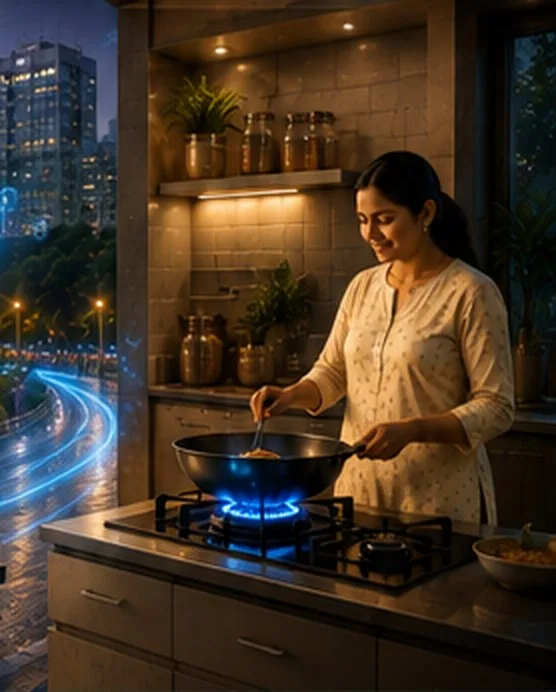
Instant, controllable heat
Full flame in under two seconds and a simmer setting low enough for milk and curd.

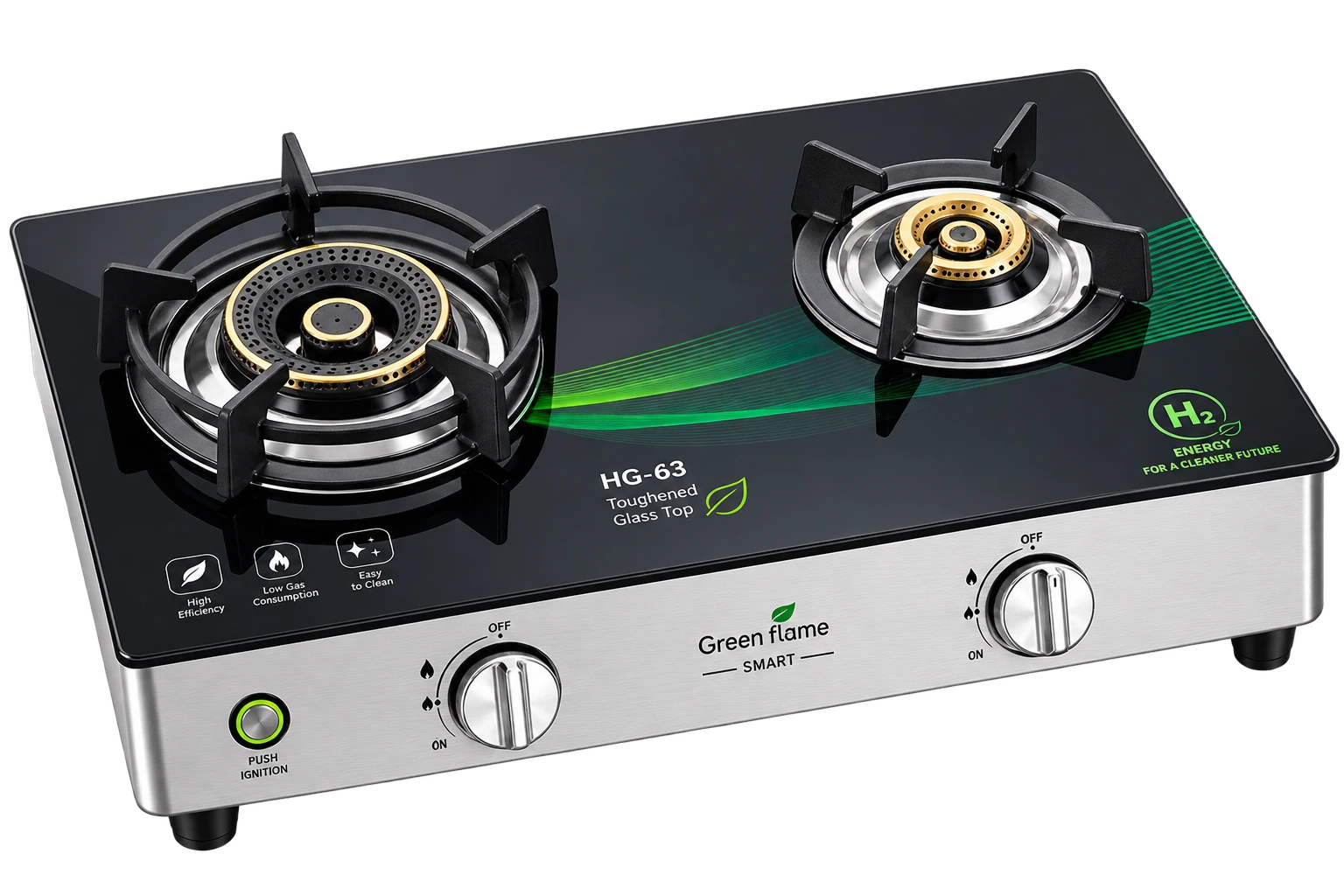
A carbon-free cooking appliance that makes its own fuel. Pour in purified water, turn the dial, and the stove generates hydrogen on demand for a clean blue flame — no cylinder, no refill, no soot.
Overview
The Kinetic stove replaces the cylinder with a compact electrolysis cell. Purified water and a household power socket are all it needs. Hydrogen is produced only while a burner is lit, so there is nothing stored between meals and nothing to deliver, book or queue for.
The flame behaves the way cooks expect — instant ignition, a wide throttle range and enough heat for a full tadka — while the only exhaust is water vapour.
Price
Reserve a unit with the booking amount, settle the delivery payment once the stove is installed, and put the balance on a quarterly instalment plan if you would rather spread it.
MRP
₹35,000
Model OM-2 twin-burner unit, delivered and installed.
Loan finance is a limited offer
Apply on or before that date to put the ₹15,000 balance on the quarterly plan. After it, the balance is payable at delivery.
Applications for loan finance have closed. The ₹15,000 balance is payable at delivery.
₹313 × 48 monthly instalments
The financed ₹15,000 is repaid in 48 instalments, billed once a quarter and arranged with our lending partner once the application is approved.
Prices are indicative and may change without notice. The figures confirmed on your application are the ones that apply.
Why this stove
Six design decisions that came straight out of seven years of field testing in real homes.
Full flame in under two seconds and a simmer setting low enough for milk and curd.
No particulate smoke and no carbon monoxide, so a small kitchen stays breathable.
Flame sensor, pressure cut-off, thermal fuse and automatic dry-tank shutdown.
About ₹18 of electricity a day for a family of four — roughly a third of a cylinder.
The cell stack unclips in a minute; every part is replaceable in the field.
Fits the same space as a two-burner gas hob, with the cell tucked underneath.
How it works
Four steps, all of them happening inside the stove while a burner is lit.
Pour 1.6 litres of purified water into the front-loading tank. A float gauge shows the level.
The cell starts generating hydrogen the moment a burner is opened, and stops when it closes.
Gas reaches the burner at a steady low pressure. Ignition, throttle and simmer feel familiar.
Combustion returns the hydrogen to water vapour. Nothing else leaves the burner.
A closer look
Placeholder renders below stand in for the production photography.
Specifications
Indicative figures for the pre-production unit. Final values are confirmed on the datasheet shipped with each order.
BIS testing in progress. Field units run to IEC 60335-2-6 for household cooking appliances and carry a flame-failure device on every burner.
Questions
Anything not covered here, write to us and an engineer will answer.
The stove never holds a reserve. Hydrogen is generated at low pressure only while a burner is open, and the volume inside the appliance at any moment is smaller than the gas in a lit cigarette lighter. Four independent cut-offs close the cell if a flame goes out, the tank runs dry, pressure rises or the unit overheats.
The cell stops and the flame goes out safely. The OM-2 can be paired with any 1 kVA inverter for uninterrupted cooking; an integrated battery option is planned for the next revision.
No. Dissolved salts foul the cell membrane. Use RO or distilled water below 20 ppm TDS — the supplied jug has an inline filter for everyday top-ups.
Roughly ₹18 of electricity a day for a family of four cooking three meals, based on a tariff of ₹8 per unit. Water use is about 1.5 litres a day.
Yes. The burner spacing and pan support match a standard two-burner hob, so kadai, tawa, pressure cooker and flat-bottom pans all sit correctly.
Pilot units ship to partner households and institutional kitchens through 2026, with retail distribution to follow. Join the enquiry list below to hold a place in the first batch.
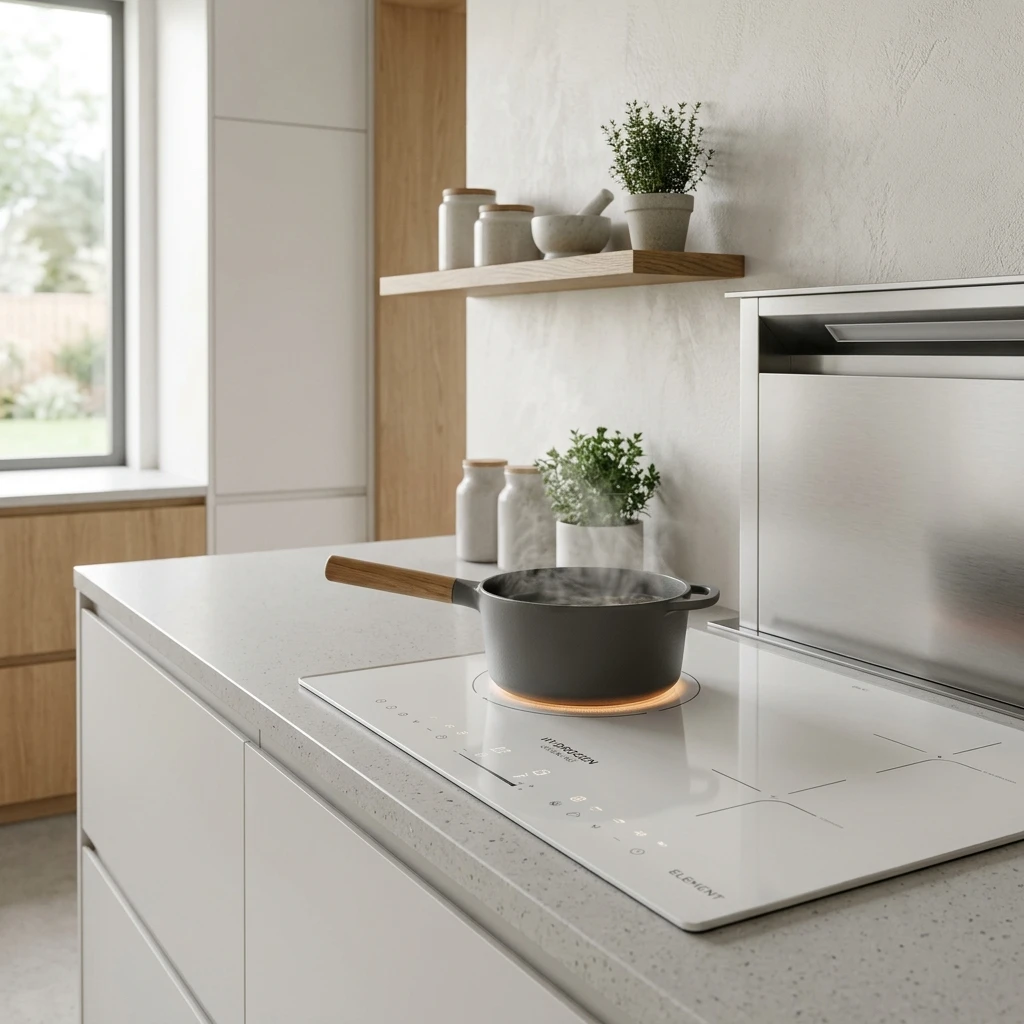
Tell us where you cook and how many meals a day. We will come back with a quote, a delivery window and a demo near you.
Request a quote